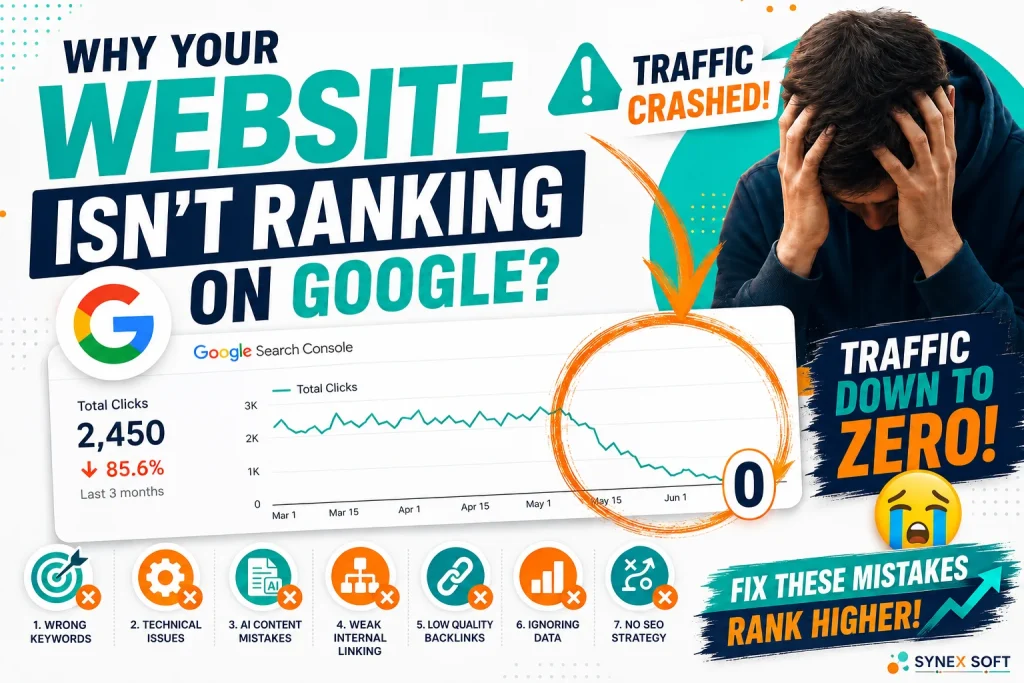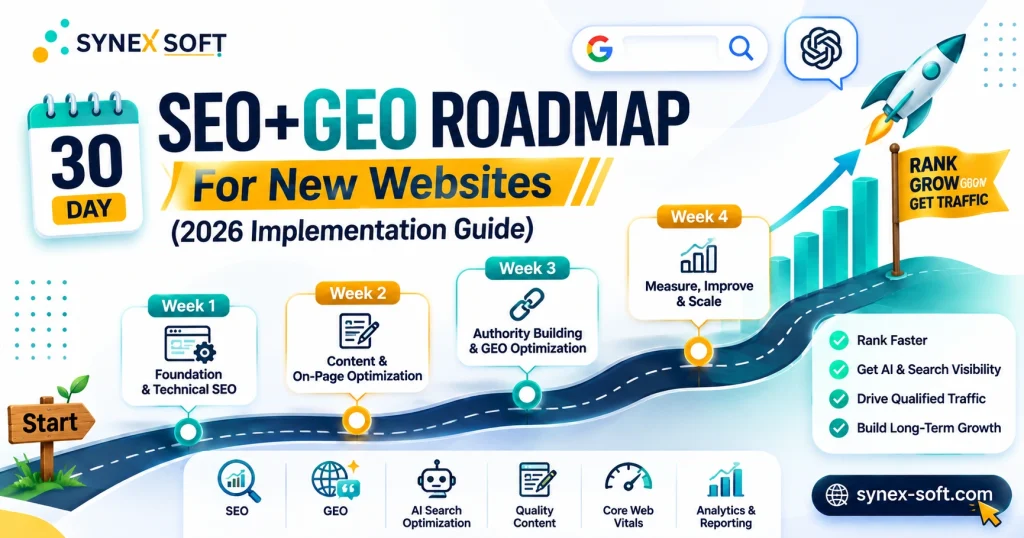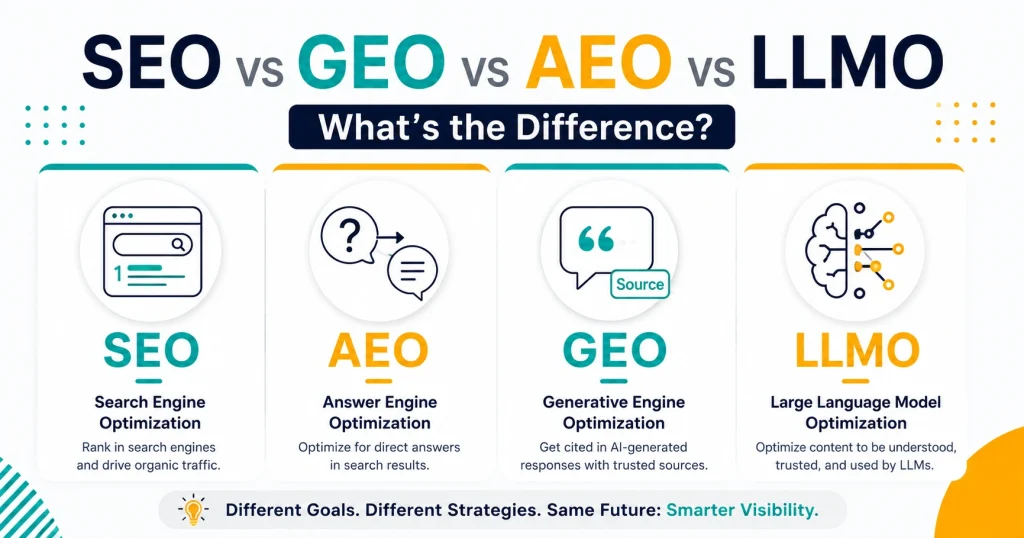
You have probably heard the term a hundred times. You know it has something to do with Google. You know your competitors are doing it. But if someone asked you to explain exactly what SEO is, how it works, and why it matters more in 2026 than it ever has before — could you give a clear, confident answer?
If not, this guide is for you.
SEO — search engine optimisation — is the discipline that determines whether your business is visible or invisible when your ideal customers go looking for what you offer. In an era where AI-powered search results, voice queries, and zero-click answers are reshaping the digital landscape, understanding SEO is no longer optional for business owners. It is foundational knowledge that directly influences your revenue.
This guide covers everything — what SEO is, how search engines actually work, why organic visibility matters, the four core categories of SEO, and the specific strategies that are delivering results in 2026. Read it once and you will understand more than most businesses ever bother to learn.
What Is SEO? A Clear, Jargon-Free Definition
Search Engine Optimisation (SEO) is the process of improving a website so that it appears higher in search engine results pages (SERPs) when people search for topics, products, or services related to your business.
The word “optimisation” is key. You are not paying for placement the way you do with Google Ads. You are earning it — by making your website more useful, more trustworthy, more technically sound, and more relevant to the searches your potential customers are making.
When someone searches “accountant for small business” or “how to fix a leaking pipe” or “best project management software,” Google analyses hundreds of signals about every page on the internet and ranks them in order of relevance and authority. SEO is the practice of making your pages the ones Google chooses to rank at the top.
It is worth being clear about what SEO is not. SEO is not a trick. It is not about gaming an algorithm. It is not about stuffing keywords into your pages and hoping for the best. In 2026, those approaches do not work — and they actively damage your website’s standing with search engines. Modern SEO is about creating genuinely useful content, building legitimate authority, and ensuring your website functions at the technical standard that search engines and users expect.
Why Does SEO Matter? The Business Case in 2026
Before diving into how SEO works, it is worth being direct about why it deserves your attention and investment.
Organic search is still the largest single source of website traffic on the internet. Despite the rise of social media, paid advertising, and AI-generated answers, the majority of online experiences begin with a search engine query. When someone needs something — a service, a product, an answer, a recommendation — their first move is almost always to search.
The first page of Google captures the overwhelming majority of clicks. Research consistently shows that the top organic result receives anywhere from 25% to 40% of all clicks for a given search. The second page receives less than 1% of traffic in aggregate. If your business is not on page one for the searches that matter to your market, you are effectively invisible to the customers actively looking for what you provide.
SEO delivers compounding returns that paid advertising cannot match. When you run a Google Ads campaign, your visibility exists precisely as long as your budget does. The moment spending stops, so does the traffic. SEO works differently. The rankings, authority, and content assets you build through SEO continue delivering traffic long after the initial investment. The ROI compounds over time rather than evaporating.
The search landscape is changing — and that makes SEO more important, not less. In 2026, Google’s AI-powered search experiences, including AI Overviews that appear at the top of results pages, are changing how people interact with search results. Businesses with strong SEO foundations — high topical authority, trusted backlink profiles, structured data, and excellent content — are the ones being cited and featured in these AI-generated summaries. Businesses without those foundations are being pushed further down the page. The stakes of doing SEO well have never been higher.
How Do Search Engines Work?
To understand SEO, you first need to understand what search engines actually do. Google’s process for turning a search query into a ranked list of results involves three distinct stages.
-
Stage 1: Crawling
Search engines deploy automated programs called crawlers, spiders, or bots that systematically browse the internet, following links from page to page and discovering content. When a crawler finds your website, it reads your pages — the text, the images, the code, the links — and reports back to Google’s servers. This is how Google discovers that your content exists.
Crawling happens continuously. Google is always crawling the web, discovering new content and revisiting pages it has already found to check for updates. The frequency with which Google crawls your site depends partly on how active and authoritative it is. A site that publishes fresh content regularly and earns backlinks from other sites gets crawled more often than a static site that never changes. -
Stage 2: Indexing
After crawling a page, Google analyses what it has found and decides whether to add it to its index — the massive database of web content that Google draws from when serving search results. Not every page gets indexed. Google may decline to index pages that are thin in content, duplicate content from elsewhere on the web, marked as no-index by the website owner, or inaccessible due to technical errors.
Indexing is where the understanding happens. Google does not just store your page — it analyses and interprets it, determining what the page is about, what topics it covers, what questions it answers, and what entities it mentions. This interpretation has become significantly more sophisticated with Google’s AI-based understanding systems, which can now grasp meaning, context, and intent rather than simply matching keywords. -
Stage 3: Ranking
When a user submits a search query, Google does not search the entire internet in real time. It searches its index and uses complex algorithms to determine which of the many pages about a given topic are most relevant, most authoritative, and most useful for that specific query — then delivers them in ranked order.
Google’s ranking algorithm considers hundreds of signals simultaneously. These include the relevance of your content to the query, the authority of your website as indicated by backlinks and engagement signals, the technical performance of your page including loading speed and mobile experience, the freshness of your content where recency matters, and increasingly in 2026, signals of expertise, experience, authoritativeness, and trustworthiness — what Google’s quality guidelines refer to as E-E-A-T.
Understanding these three stages — crawling, indexing, ranking — is what makes sense of every individual SEO tactic. Every technique in SEO exists to positively influence one or more of these three processes.
The Four Core Categories of SEO
SEO is typically organised into four interconnected disciplines. Each addresses a different dimension of how search engines discover, evaluate, and rank your content.
1. On-Page SEO
On-page SEO refers to all the optimisation work done directly on your website pages. It is about making each page as clear, relevant, and useful as possible — both for the humans reading it and for the search engine crawlers analysing it.
The core elements of on-page SEO include:
- Keyword research and integration. Before you can optimise a page, you need to understand what search terms your target audience is actually using. Keyword research identifies the specific queries people type into Google when looking for what you offer. Those keywords then need to be woven naturally into your page title, your H1 heading, your subheadings, your body content, and your meta description — not stuffed artificially, but used in a way that reflects how you would naturally discuss the topic.
- Title tags and meta descriptions. The title tag is the clickable headline that appears in search results. It is one of the most important on-page SEO elements and should include your primary keyword while being genuinely compelling to encourage clicks. The meta description is the summary text below the title. While it is not a direct ranking factor, a well-written meta description significantly improves your click-through rate, which is itself a positive signal.
- Heading structure. Your page should use a clear heading hierarchy — one H1 that defines the page’s primary topic, H2 headings for major sections, and H3 headings for subsections. This structure helps both readers navigate your content and search engines understand how your content is organised.
- Content quality and depth. In 2026, Google’s definition of quality content has evolved significantly. It is not just about length — it is about genuinely answering the searcher’s question with depth, accuracy, and useful specificity. Thin, generic content that restates the obvious is being progressively deprioritised. Content that demonstrates real expertise, provides original insight, and satisfies search intent at a level competitors have not matched is what earns and holds high rankings.
- Internal linking. Linking from one page on your site to another passes authority between pages, helps search engines understand the relationships between your content, and keeps visitors engaged with additional useful information. A well-structured internal linking strategy is one of the most underused levers in on-page SEO.
- Image optimisation. Images should be compressed to minimise their file size impact on page loading speed, given descriptive file names, and tagged with accurate alt text — both to describe the image to visually impaired users and to give search engines another signal about your page’s topic.
2. Off-Page SEO
Off-page SEO covers everything done outside your own website to build your authority, reputation, and trustworthiness in the eyes of search engines. The most important off-page signal by a significant margin is backlinks.
Backlinks are links from external websites to yours. Think of each backlink as a vote of confidence — another website is saying, implicitly, that your content is credible and worth referencing. The more authoritative, relevant, and trustworthy the linking website is, the more value that backlink carries. A single link from a highly respected industry publication carries more weight than dozens of links from obscure, irrelevant sites.
This is why link-building strategy matters enormously. The most effective approach to earning backlinks focuses on creating content that is genuinely worth linking to — original research, comprehensive guides, useful tools, expert commentary — and then promoting that content to the audiences and publications most likely to reference it.
Alongside backlinks, off-page SEO increasingly includes:
- Brand mentions and digital PR. Google can detect when your brand is discussed online even without a direct link, and frequent, positive mentions from credible sources contribute to your overall authority signals.
- Social proof and engagement. While social media signals are not direct ranking factors, a strong social presence amplifies your content’s reach, drives traffic that improves engagement signals, and builds the brand awareness that generates branded searches — which Google interprets as a trust signal.
- Review signals. For businesses with a local or customer-facing dimension, reviews on Google, Trustpilot, and industry platforms contribute to perceived trustworthiness — a factor that influences both rankings and conversion rates from search traffic.
3. Technical SEO
Technical SEO is the foundation that all other SEO work sits on. It ensures that search engine crawlers can access, read, and index your website without barriers — and that the user experience your site delivers meets the standards that Google’s algorithm rewards.
No matter how excellent your content is and how many backlinks you have earned, technical problems can prevent search engines from properly indexing your pages and cap the rankings you can achieve.
- Site speed and Core Web Vitals are among the most critical technical factors in 2026. Google’s Core Web Vitals — Largest Contentful Paint (LCP), Interaction to Next Paint (INP), and Cumulative Layout Shift (CLS) — measure specific aspects of the loading and interaction experience. Pages that fail these metrics are at a ranking disadvantage, particularly on mobile.
- Mobile optimisation. The majority of searches now happen on mobile devices. Google uses mobile-first indexing, meaning it primarily evaluates the mobile version of your site when determining rankings. A site that performs poorly on mobile is handicapped across all its rankings.
- Crawlability and indexability. Your robots.txt file, your XML sitemap, your internal linking structure, and your page response codes all affect how efficiently Google can crawl and index your site. Technical errors — broken links, redirect chains, accidentally blocked pages, duplicate content — waste crawl budget and can prevent your best content from being indexed correctly.
- Structured data and schema markup. Adding schema markup to your pages communicates specific information to search engines in a machine-readable format — your business details, your reviews, your FAQs, your product information. This improves how Google understands and displays your content, and in 2026 it is increasingly important for visibility in AI-generated search summaries that pull from structured data sources.
- HTTPS and site security. Google treats HTTPS as a ranking signal and marks non-secure sites with browser warnings that deter users. Every website should be running on HTTPS with a valid, current SSL certificate.
4. Local SEO
Local SEO is a specialised branch of search engine optimisation that focuses specifically on improving visibility for searches with geographic intent — “near me” queries, searches that include a city or area, and results displayed in Google Maps. For any business that serves customers in a specific area, local SEO is the dimension of SEO with the most direct impact on foot traffic, phone calls, and local leads.
The central pillar of local SEO is the Google Business Profile — the free listing that powers your appearance in the local pack and Google Maps. A fully optimised, verified, and actively maintained Google Business Profile is the single highest-return local SEO investment available to most businesses.
Beyond the GBP, local SEO involves consistent NAP information (Name, Address, Phone number) across all online directories, a systematic review generation and response strategy, location-specific content on your website, and local citation building across relevant business directories. For businesses with multiple locations, dedicated location pages — each with unique, genuinely useful content — extend your local search footprint across every area you serve.
Key SEO Strategies That Are Delivering Results in 2026
Knowing the four categories of SEO is the foundation. Understanding which specific strategies are producing results in the current search landscape is what separates growing businesses from stagnant ones.
Build Topical Authority, Not Just Individual Rankings
The most significant shift in SEO thinking over the past few years is the move from targeting individual keywords to building topical authority. Google’s algorithms now evaluate whether your website comprehensively covers a subject area — not just whether a single page contains specific keywords.
Topical authority is built by creating a network of interconnected content that covers your subject area from multiple angles: a pillar page that defines the core topic, supporting articles that go deep on specific subtopics, FAQ content that addresses the questions your audience actually asks, and case studies or practical guides that demonstrate real-world application.
When Google’s systems evaluate your site and see that you have deeply, comprehensively covered a subject — that every relevant question a searcher might have is answered somewhere on your site — it assigns your domain higher authority for that topic, which lifts rankings across your entire content portfolio, not just individual pages.
Align Every Page with Search Intent
Every search query has an intent behind it. Google has become extraordinarily good at identifying what type of content a searcher actually wants — and it penalises pages that do not match that intent, regardless of how well optimised they are in other respects.
Search intent falls into four categories:
- Informational — the searcher wants to learn something (“what is SEO”)
- Navigational — the searcher wants to find a specific website or page (“Synex Soft contact”)
- Commercial — the searcher is researching before making a decision (“best SEO company for small business”)
- Transactional — the searcher is ready to act (“hire SEO specialist”)
The format, depth, and style of content that Google rewards is different for each intent type. An informational query rewards a comprehensive guide. A transactional query rewards a clear service page with strong calls to action. Creating the wrong type of content for the intent behind a query is one of the most common reasons pages fail to rank despite being well-written and well-optimised.
Prioritise E-E-A-T Signals Across Your Site
Google’s quality guidelines centre on E-E-A-T: Experience, Expertise, Authoritativeness, and Trustworthiness. These are not checkboxes — they are the qualities that Google’s algorithms, informed by human quality raters, use to distinguish genuinely valuable content from superficially optimised noise.
In practical terms, E-E-A-T means: your content should be written by people with genuine expertise in the subject. Author bios should reflect real credentials and experience. Claims should be accurate and sourced. Your website’s About page should clearly communicate who is behind the business. Your reviews, your backlinks, and your overall digital presence should reinforce your credibility rather than undermine it.
In 2026, this matters more than ever because Google is increasingly using AI to evaluate content quality. Content that demonstrates real-world experience and expertise is being rewarded. Content that is evidently AI-generated without human oversight, factually vague, or designed primarily to rank rather than to genuinely inform is being systematically deprioritised.
Optimise for AI-Powered Search Features
AI Overviews — the AI-generated summaries that appear at the top of Google results for many queries — represent the most significant change to the search results page in over a decade. In 2026, appearing in or being cited by these AI Overviews is becoming an important additional dimension of SEO visibility.
The good news is that the content most likely to be cited in AI Overviews is the same content that has always performed well in organic SEO: accurate, well-structured, authoritative content that directly and completely answers the question being asked. Adding clear FAQ sections, using structured headings, implementing schema markup, and maintaining strong E-E-A-T signals all improve your eligibility for these AI-generated placements.
SEO vs. Paid Search: Understanding the Difference
A question that comes up constantly is whether businesses should invest in SEO or Google Ads — and the honest answer is that they serve different purposes and work best in combination.
Google Ads (pay-per-click advertising) delivers immediate visibility. The moment you set up a campaign and fund it, your ads appear at the top of search results for your target keywords. The trade-off is that this visibility is entirely dependent on continued spending. The moment your budget runs out, your ads disappear and your traffic drops to zero.
SEO takes longer to produce results — typically 3 to 6 months before meaningful ranking improvements become visible, and 9 to 12 months to see the full compounding effect. But the asset you build through SEO — the rankings, the authority, the content — does not disappear when you stop paying. It continues delivering traffic indefinitely. The cost per acquisition from organic search drops over time as your authority grows.
Most businesses benefit from using both: Google Ads for immediate visibility and lead flow while SEO builds, and SEO for long-term organic growth that reduces dependence on paid traffic over time. Businesses that rely exclusively on paid advertising are always one budget cut away from losing all their visibility. Businesses that invest in SEO alongside paid ads are building a compounding asset that makes every subsequent marketing investment more efficient.
How Long Does SEO Take to Show Results?
This is the question every business owner asks — and deserves a straight answer.
Early signals of SEO improvement typically appear within 4 to 8 weeks: better crawling efficiency, more pages being indexed, small improvements in rankings for lower-competition queries. Meaningful traffic growth from organic search generally begins at the 3 to 6 month mark. Significant ranking improvements for competitive terms, and the compounding traffic and lead growth that makes SEO transformational, typically take 9 to 18 months of consistent, strategic effort.
Three factors determine how quickly you see results: the competitiveness of your market, the current state of your website’s technical foundation, and the quality and consistency of your SEO execution. Businesses starting with a technically sound website in a moderately competitive market, executing a strong SEO strategy consistently, typically see strong results within 6 months. Businesses in highly competitive verticals with technical debt to address may need to set a longer expectation.
The critical thing to understand is that SEO timelines are not a weakness — they are the mechanism of the moat. The fact that results take time to build is precisely why organic rankings are so valuable once achieved. They represent a competitive barrier that cannot simply be replicated by a competitor throwing budget at the problem overnight.
Conclusion: SEO in 2026 Is Still the Highest-ROI Channel for Long-Term Growth
The fundamentals of SEO — create genuinely useful content, build legitimate authority, make your website technically excellent — have not changed since search engines were invented. What has changed in 2026 is the sophistication with which Google evaluates those fundamentals, the additional dimension of AI-powered search features that reward the same qualities, and the increasing stakes of getting it right versus getting it wrong.
Businesses that invest in SEO consistently and strategically are building an organic search presence that compounds in value month after month — delivering traffic, leads, and customers at a progressively lower cost per acquisition. Businesses that ignore SEO, or delegate it to tactics that no longer work, are conceding the highest-ROI channel in digital marketing to their competitors.
If you are serious about growing your business online in 2026, SEO is not one option among many. It is the foundation everything else is built on.
Synex Soft’s SEO team has helped 200+ businesses across 15 countries build organic search presences that deliver compounding, measurable growth. Whether you need a full SEO audit, a content strategy built on topical authority, or an end-to-end SEO partnership — we have the expertise and the track record to deliver results you can see in your revenue, not just your analytics. Contact us for a free SEO audit and we will tell you exactly where your biggest opportunities are.
Frequently Asked Questions About SEO
Q. What does SEO stand for and what does it mean?
SEO stands for Search Engine Optimisation. It refers to the practice of improving a website so that it ranks higher in organic (unpaid) search engine results pages, attracting more relevant traffic from people actively searching for what your business offers.
Q. Is SEO still worth investing in when AI is changing search?
More than ever. AI-powered search features like Google’s AI Overviews are not replacing organic search — they are an additional layer on top of it. The content being cited and featured in these AI summaries is the same well-structured, authoritative, E-E-A-T-aligned content that has always performed well in organic SEO. If anything, the shift toward AI search increases the advantage of businesses with strong SEO foundations over those without.
Q. What is the difference between on-page, off-page, and technical SEO?
On-page SEO covers optimisation done directly on your website pages — content, keywords, headings, and metadata. Off-page SEO covers external signals like backlinks and brand mentions that build your authority. Technical SEO covers the behind-the-scenes infrastructure — site speed, crawlability, indexing, and structured data — that enables everything else to work. All three work together, and neglecting any one of them creates a ceiling on what the others can achieve.
Q. How do I know if my SEO is working?
Track organic traffic growth through Google Analytics, keyword ranking improvements through a rank tracking tool, and conversion rates from organic search through your analytics goals. Google Search Console shows you which queries are generating impressions and clicks. The clearest signal is always business outcomes — more calls, enquiries, or sales attributed to organic search — rather than ranking positions in isolation.
Q. Can I do SEO myself or do I need an agency?
The foundational principles of SEO — good content, fast website, clear structure, earning relevant backlinks — can be applied by a motivated business owner willing to invest time in learning them. The depth of technical knowledge required for competitive markets, the time investment required for content creation and link building, and the expertise needed to navigate algorithm changes are why most serious businesses partner with an SEO specialist or agency. The question is less about capability and more about the opportunity cost of your time.